Future of AI Consumer Insights: How AI Is Transforming Consumer Research
Future of AI Consumer Insights: How AI Is Transforming Consumer Research
For decades, consumer research relied on surveys, focus groups, and manual analysis. While these methods provided valuable information, they often struggled to keep pace with how quickly consumer behavior evolves today. Digital platforms, social conversations, video content, and behavioral data generate an unprecedented volume of signals about how people think, shop, and interact with brands. Traditional research methods were never designed to interpret this scale of complexity.
For decades, consumer research relied on surveys, focus groups, and manual analysis. While these methods provided valuable information, they often struggled to keep pace with how quickly consumer behavior evolves today. Digital platforms, social conversations, video content, and behavioral data generate an unprecedented volume of signals about how people think, shop, and interact with brands. Traditional research methods were never designed to interpret this scale of complexity.
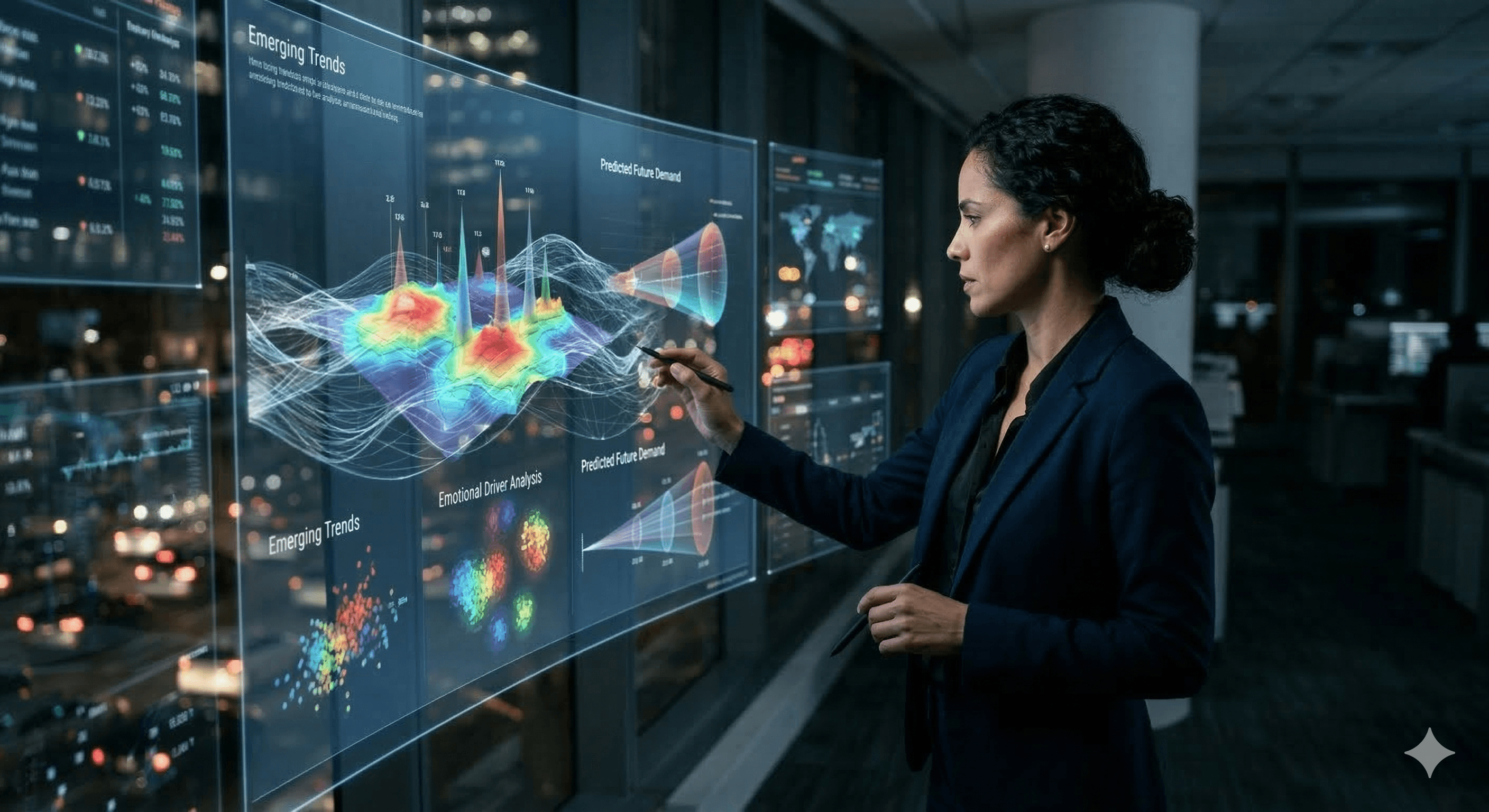

From signals to Ranked Decisions
From signals to Ranked Decisions
This is where AI consumer insights are transforming the landscape. Artificial intelligence is enabling organizations to move beyond retrospective analysis toward real-time understanding of consumer behavior, uncovering patterns that were previously impossible to detect. As brands compete in increasingly complex markets, AI-driven insights are becoming essential for identifying emerging trends, understanding emotional drivers, and predicting future demand.
This is where AI consumer insights are transforming the landscape. Artificial intelligence is enabling organizations to move beyond retrospective analysis toward real-time understanding of consumer behavior, uncovering patterns that were previously impossible to detect. As brands compete in increasingly complex markets, AI-driven insights are becoming essential for identifying emerging trends, understanding emotional drivers, and predicting future demand.
What Are AI Consumer Insights?
What Are AI Consumer Insights?
AI consumer insights refer to the use of artificial intelligence technologies to analyze large volumes of consumer data in order to identify patterns, behaviors, and opportunities.
Unlike traditional research, which often focuses on structured data like survey responses, AI systems can process both structured and unstructured information, including:
Social media conversations
Online reviews
Video and visual content
Behavioral data from digital platforms
Customer service interactions
App usage patterns
AI consumer insights refer to the use of artificial intelligence technologies to analyze large volumes of consumer data in order to identify patterns, behaviors, and opportunities.
Unlike traditional research, which often focuses on structured data like survey responses, AI systems can process both structured and unstructured information, including:
Social media conversations
Online reviews
Video and visual content
Behavioral data from digital platforms
Customer service interactions
App usage patterns


From Reactive Feedback to Predictive Intelligence
From Reactive Feedback to Predictive Intelligence
AI models analyze these signals to uncover trends, sentiment shifts, and emerging needs.
Instead of asking consumers what they think after a trend has already formed, AI allows organizations to observe behavioral signals as they happen.
This shift from reactive insights to predictive consumer intelligence is fundamentally changing how companies make strategic decisions.
AI models analyze these signals to uncover trends, sentiment shifts, and emerging needs.
Instead of asking consumers what they think after a trend has already formed, AI allows organizations to observe behavioral signals as they happen.
This shift from reactive insights to predictive consumer intelligence is fundamentally changing how companies make strategic decisions.
Why Traditional Consumer Research Is Reaching Its Limits
Why Traditional Consumer Research Is Reaching Its Limits
Traditional market research remains valuable, but several challenges limit its effectiveness in today’s environment.
Speed
Survey-based research can take weeks or months to design, collect, and analyze. Meanwhile, consumer trends can emerge and evolve within days on digital platforms.
Scale
Billions of conversations about products, lifestyles, and experiences occur online every day. Manual research methods simply cannot process this volume of information.
Traditional market research remains valuable, but several challenges limit its effectiveness in today’s environment.
Speed
Survey-based research can take weeks or months to design, collect, and analyze. Meanwhile, consumer trends can emerge and evolve within days on digital platforms.
Scale
Billions of conversations about products, lifestyles, and experiences occur online every day. Manual research methods simply cannot process this volume of information.


The Evolution of Consumer Understanding
The Evolution of Consumer Understanding
Behavioral vs. Stated Data
Consumers often say one thing in surveys but behave differently in real life. AI-driven analysis can capture behavioral signals, which tend to be more accurate indicators of real preferences.
Fragmented Data Sources
Consumer insights now exist across multiple channels including video, text, images, and community discussions. Traditional research tools typically analyze these data sources separately.
AI systems are uniquely suited to integrate these fragmented signals into a holistic view of consumer behavior.
Behavioral vs. Stated Data
Consumers often say one thing in surveys but behave differently in real life. AI-driven analysis can capture behavioral signals, which tend to be more accurate indicators of real preferences.
Fragmented Data Sources
Consumer insights now exist across multiple channels including video, text, images, and community discussions. Traditional research tools typically analyze these data sources separately.
AI systems are uniquely suited to integrate these fragmented signals into a holistic view of consumer behavior.
Technologies Driving AI Consumer Insights
Technologies Driving AI Consumer Insights
Several advances in artificial intelligence are accelerating the evolution of consumer research.
Natural Language Processing
Natural language processing (NLP) allows AI to analyze large volumes of written and spoken language.
This technology can identify:
sentiment trends
emerging topics
emotional drivers behind consumer conversations
For example, AI can detect when consumers begin associating a product category with concepts such as “stress relief,” “energy,” or “sustainability.”
These subtle language patterns often signal emerging consumer needs.
Several advances in artificial intelligence are accelerating the evolution of consumer research.
Natural Language Processing
Natural language processing (NLP) allows AI to analyze large volumes of written and spoken language.
This technology can identify:
sentiment trends
emerging topics
emotional drivers behind consumer conversations
For example, AI can detect when consumers begin associating a product category with concepts such as “stress relief,” “energy,” or “sustainability.”
These subtle language patterns often signal emerging consumer needs.
Multimodal AI
Multimodal AI
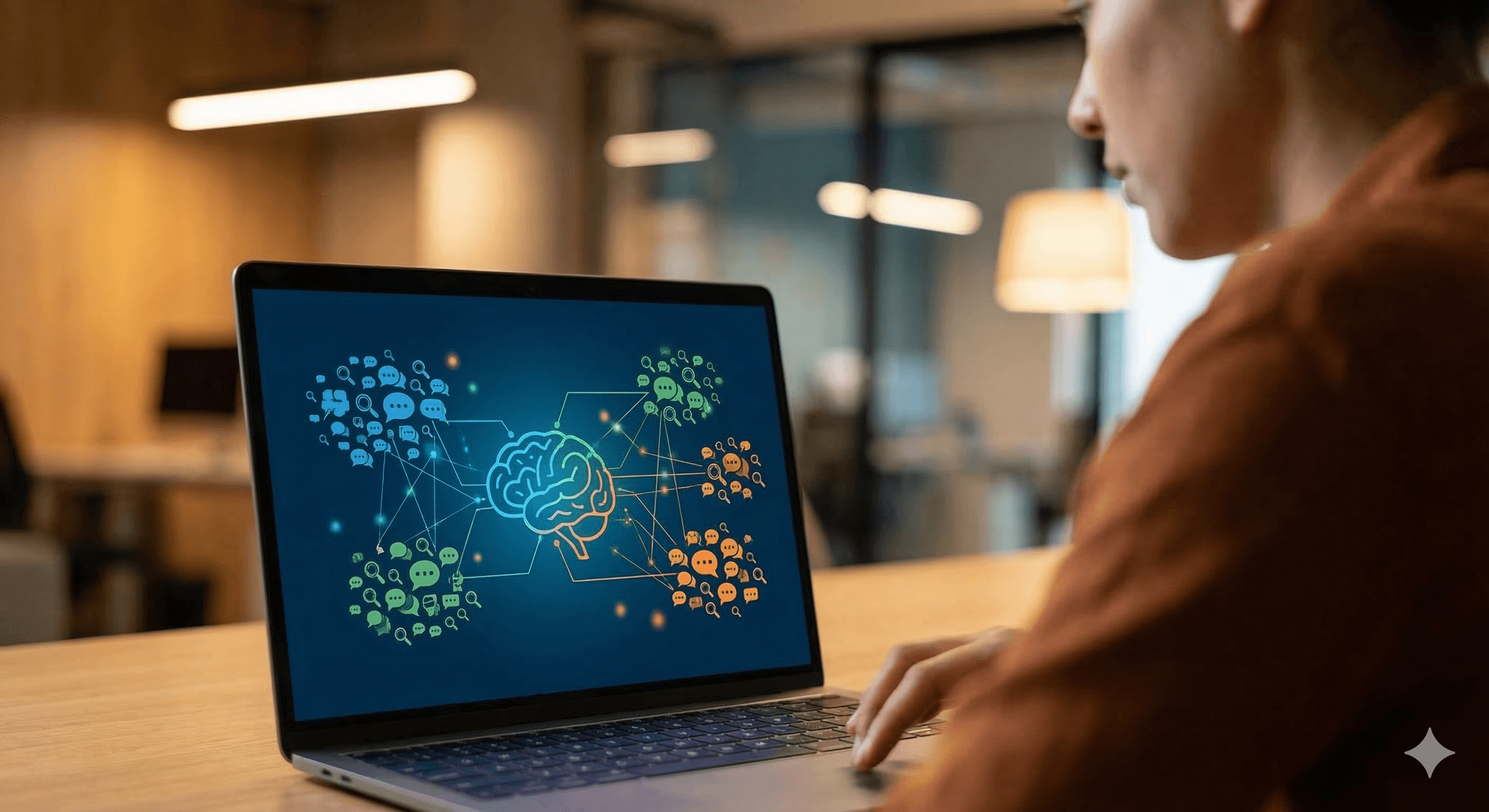
Multimodal AI represents one of the most significant breakthroughs in consumer intelligence.
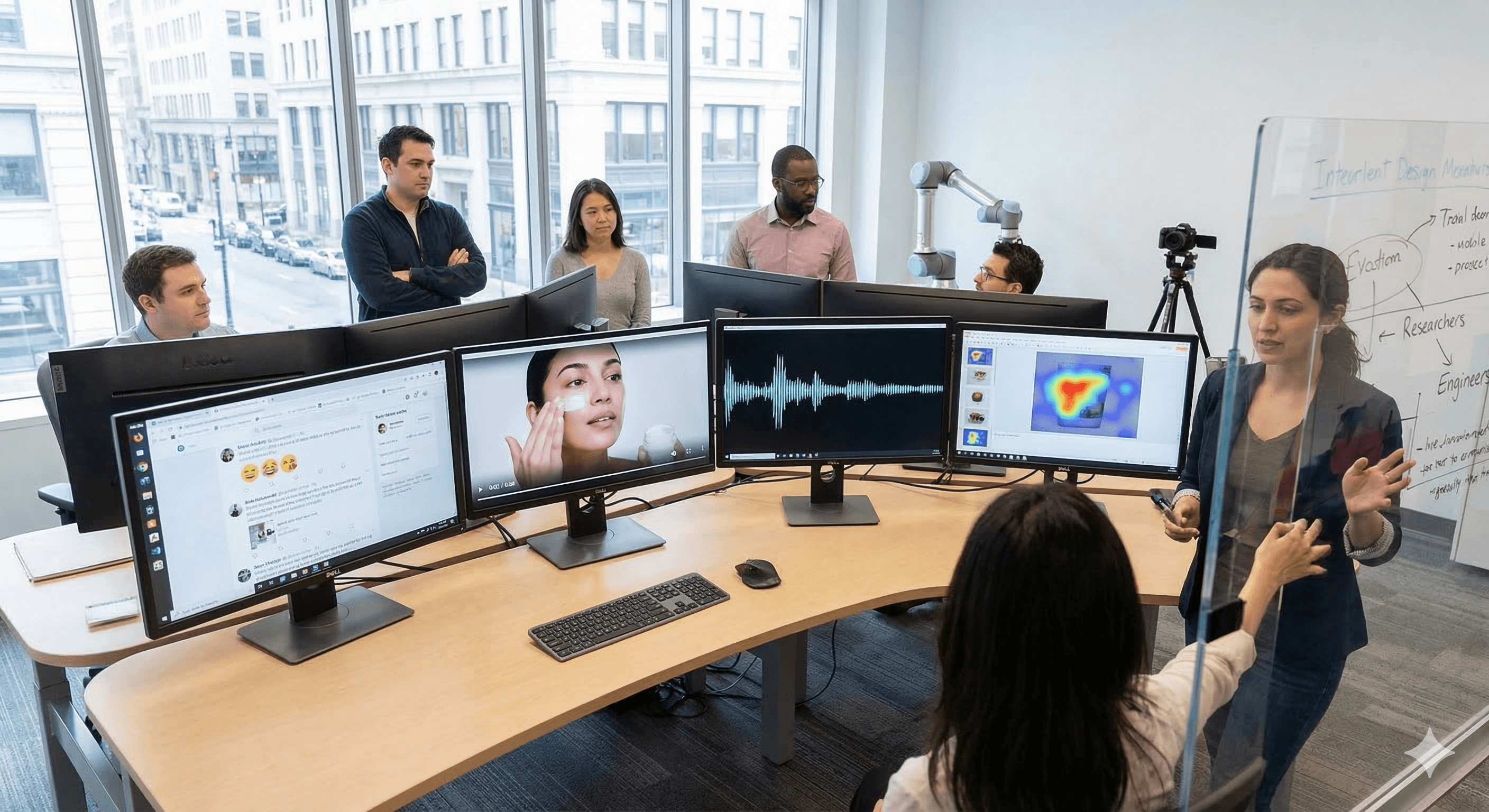
Instead of analyzing only text or numerical data, multimodal systems process multiple data types simultaneously, including:
text
video
images
audio
behavioral interactions
For example, a consumer discussing skincare on social media may combine written comments, video demonstrations, and visual product imagery. Multimodal AI can analyze all of these signals together, revealing deeper behavioral insights.
This capability enables brands to understand not just what consumers say, but how they visually and emotionally engage with products.
Multimodal AI represents one of the most significant breakthroughs in consumer intelligence.
Instead of analyzing only text or numerical data, multimodal systems process multiple data types simultaneously, including:
text
video
images
audio
behavioral interactions
For example, a consumer discussing skincare on social media may combine written comments, video demonstrations, and visual product imagery. Multimodal AI can analyze all of these signals together, revealing deeper behavioral insights.
This capability enables brands to understand not just what consumers say, but how they visually and emotionally engage with products.
Machine Learning and Pattern Detection
Machine Learning and Pattern Detection
Machine learning algorithms identify patterns across vast datasets, often detecting relationships that human analysts might overlook.
These systems can cluster similar consumer behaviors together, revealing:
emerging lifestyle trends
new product usage occasions
evolving attitudes toward wellness, sustainability, or technology
By recognizing these patterns early, companies can anticipate shifts in consumer demand.
Machine learning algorithms identify patterns across vast datasets, often detecting relationships that human analysts might overlook.
These systems can cluster similar consumer behaviors together, revealing:
emerging lifestyle trends
new product usage occasions
evolving attitudes toward wellness, sustainability, or technology
By recognizing these patterns early, companies can anticipate shifts in consumer demand.


Predictive Consumer Modeling
Predictive Consumer Modeling
One of the most powerful applications of AI consumer insights is predictive modeling.
Rather than simply analyzing historical behavior, AI can forecast how consumer preferences may evolve based on patterns observed across datasets.
Predictive insights help organizations answer questions such as:
Which wellness trends are likely to grow over the next two years?
How will younger generations redefine product categories?
What new formats or experiences will resonate with emerging consumers?
This capability enables brands to shift from reactive innovation to proactive product strategy.
One of the most powerful applications of AI consumer insights is predictive modeling.
Rather than simply analyzing historical behavior, AI can forecast how consumer preferences may evolve based on patterns observed across datasets.
Predictive insights help organizations answer questions such as:
Which wellness trends are likely to grow over the next two years?
How will younger generations redefine product categories?
What new formats or experiences will resonate with emerging consumers?
This capability enables brands to shift from reactive innovation to proactive product strategy.
How Brands Are Using AI Consumer Insights
How Brands Are Using AI Consumer Insights
Leading organizations across industries are integrating AI into their consumer intelligence strategies.
Product Innovation
AI analysis helps identify unmet needs and emerging product concepts by analyzing conversations, behaviors, and category trends.
For example, brands can detect early signals around:
personalized nutrition
sustainable packaging
digital wellness tools
functional ingredients
These insights inform product development pipelines and help companies innovate faster.
Leading organizations across industries are integrating AI into their consumer intelligence strategies.
Product Innovation
AI analysis helps identify unmet needs and emerging product concepts by analyzing conversations, behaviors, and category trends.
For example, brands can detect early signals around:
personalized nutrition
sustainable packaging
digital wellness tools
functional ingredients
These insights inform product development pipelines and help companies innovate faster.


Marketing Strategy
Marketing Strategy
AI consumer insights provide a deeper understanding of how different audiences interpret brand messaging.
By analyzing language patterns and emotional drivers, companies can design marketing strategies that resonate with specific communities and generational groups.
For instance, younger audiences may discuss wellness in terms of mental balance and lifestyle optimization, while older consumers may emphasize vitality and health maintenance.
Understanding these nuances allows brands to tailor messaging more effectively.
AI consumer insights provide a deeper understanding of how different audiences interpret brand messaging.
By analyzing language patterns and emotional drivers, companies can design marketing strategies that resonate with specific communities and generational groups.
For instance, younger audiences may discuss wellness in terms of mental balance and lifestyle optimization, while older consumers may emphasize vitality and health maintenance.
Understanding these nuances allows brands to tailor messaging more effectively.
Consumer Segmentation
Consumer Segmentation
Traditional segmentation often relies on demographic categories such as age or income.
AI-driven insights enable behavior-based segmentation, grouping consumers based on shared motivations, lifestyle patterns, and emotional drivers.
This approach creates more meaningful audience profiles and improves targeting strategies.
Traditional segmentation often relies on demographic categories such as age or income.
AI-driven insights enable behavior-based segmentation, grouping consumers based on shared motivations, lifestyle patterns, and emotional drivers.
This approach creates more meaningful audience profiles and improves targeting strategies.


Strategic Decision-Making
Strategic Decision-Making
Executives increasingly rely on AI-generated insights to guide long-term strategic planning.
Because AI systems analyze signals from multiple markets and platforms simultaneously, they provide a more comprehensive understanding of global consumer dynamics.
This allows organizations to align innovation, marketing, and sustainability strategies with evolving consumer expectations.
Executives increasingly rely on AI-generated insights to guide long-term strategic planning.
Because AI systems analyze signals from multiple markets and platforms simultaneously, they provide a more comprehensive understanding of global consumer dynamics.
This allows organizations to align innovation, marketing, and sustainability strategies with evolving consumer expectations.
The Role of Multimodal Data in the Future of Consumer Insights
The Role of Multimodal Data in the Future of Consumer Insights
One of the most significant shifts in consumer research is the transition toward multimodal data integration.
Consumers today communicate across multiple formats simultaneously:
they post videos explaining product routines
they share images of purchases or experiences
they comment on brand messaging in real time
they discuss product performance in community forums
Each of these signals provides a piece of the consumer behavior puzzle.
One of the most significant shifts in consumer research is the transition toward multimodal data integration.
Consumers today communicate across multiple formats simultaneously:
they post videos explaining product routines
they share images of purchases or experiences
they comment on brand messaging in real time
they discuss product performance in community forums
Each of these signals provides a piece of the consumer behavior puzzle.


The Synthesis of Signal and Context
The Synthesis of Signal and Context
Multimodal AI brings these signals together, allowing organizations to interpret the full context of consumer conversations rather than analyzing each data type separately.
This integrated perspective reveals deeper insights into how people actually interact with products, services, and lifestyles.
Multimodal AI brings these signals together, allowing organizations to interpret the full context of consumer conversations rather than analyzing each data type separately.
This integrated perspective reveals deeper insights into how people actually interact with products, services, and lifestyles.
The Future of AI Consumer Insights
The Future of AI Consumer Insights
Looking ahead, AI will continue to expand the capabilities of consumer research.
Several developments are likely to shape the future of the field.
Real-Time Consumer Intelligence
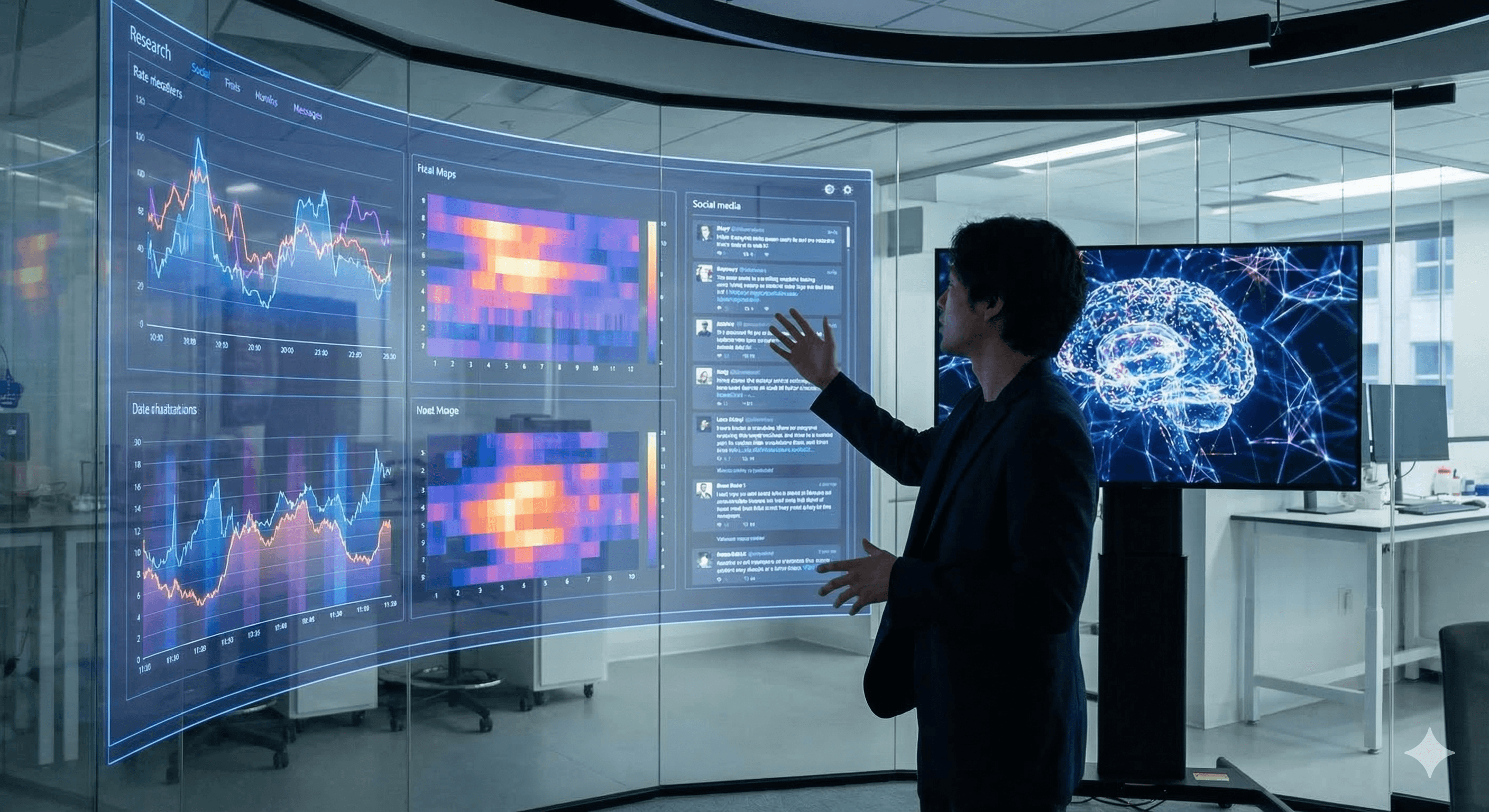
AI platforms will increasingly provide live dashboards that track emerging trends and behavioral signals as they happen.
This will allow companies to respond quickly to shifts in consumer sentiment or market demand.
Looking ahead, AI will continue to expand the capabilities of consumer research.
Several developments are likely to shape the future of the field.
Real-Time Consumer Intelligence
AI platforms will increasingly provide live dashboards that track emerging trends and behavioral signals as they happen.
This will allow companies to respond quickly to shifts in consumer sentiment or market demand.

Autonomous Research Systems
Autonomous Research Systems
AI systems may soon perform many research tasks automatically, including:
collecting data from multiple sources
identifying emerging patterns
generating insights and recommendations
Human researchers will shift toward strategic interpretation and decision-making rather than manual data analysis.
Hyper-Personalized Consumer Understanding
As AI models become more sophisticated, organizations will gain deeper insights into how different communities and individuals define wellness, value, and lifestyle experiences.
This will enable brands to design products and services that feel more personalized and culturally relevant.
AI systems may soon perform many research tasks automatically, including:
collecting data from multiple sources
identifying emerging patterns
generating insights and recommendations
Human researchers will shift toward strategic interpretation and decision-making rather than manual data analysis.
Hyper-Personalized Consumer Understanding
As AI models become more sophisticated, organizations will gain deeper insights into how different communities and individuals define wellness, value, and lifestyle experiences.
This will enable brands to design products and services that feel more personalized and culturally relevant.
A New Era of Consumer Intelligence
A New Era of Consumer Intelligence
The future of consumer research is no longer defined by surveys alone. Instead, it is powered by artificial intelligence that interprets behavior, language, and emotional signals across the digital ecosystem.
AI consumer insights allow organizations to move beyond static data toward a dynamic understanding of how people live, think, and make decisions.
The future of consumer research is no longer defined by surveys alone. Instead, it is powered by artificial intelligence that interprets behavior, language, and emotional signals across the digital ecosystem.
AI consumer insights allow organizations to move beyond static data toward a dynamic understanding of how people live, think, and make decisions.


The Human-Centered Future of Intelligence
The Human-Centered Future of Intelligence
As technologies like multimodal AI, machine learning, and predictive modeling continue to evolve, companies that embrace these tools will gain a deeper connection with their audiences.
Ultimately, the goal of AI-driven consumer intelligence is not simply to analyze data, but to create more human-centered products, services, and experiences.
In this new era, understanding consumers means understanding the complex behaviors and conversations that shape modern life.
And artificial intelligence is becoming the key to decoding those signals.
As technologies like multimodal AI, machine learning, and predictive modeling continue to evolve, companies that embrace these tools will gain a deeper connection with their audiences.
Ultimately, the goal of AI-driven consumer intelligence is not simply to analyze data, but to create more human-centered products, services, and experiences.
In this new era, understanding consumers means understanding the complex behaviors and conversations that shape modern life.
And artificial intelligence is becoming the key to decoding those signals.
Frequently Asked Questions
Frequently Asked Questions
What insights can CREWASIS generate for consumer brands?
CREWASIS generates insights on consumer behavior, sentiment, emerging trends, unmet needs, and market opportunities by analyzing multimodal data like text, images, and video. These insights help brands make faster and smarter decisions.
How does CREWASIS turn raw data into actionable insights?
CREWASIS uses AI and machine learning to analyze large volumes of consumer and market data, detect patterns, and rank signals based on impact and relevance. This transforms complex data into clear, prioritized insights for decision-making.
What makes CREWASIS insights different from traditional analytics?
Unlike traditional analytics that rely on dashboards and manual interpretation, CREWASIS statistically ranks insights and highlights what matters most. This eliminates noise and helps teams focus on high-impact opportunities faster.